

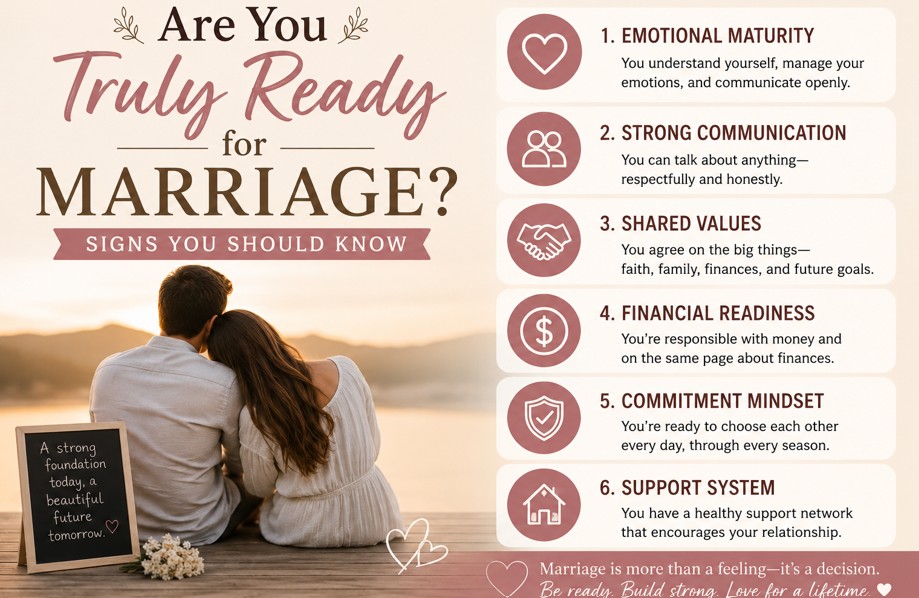
Are You Truly Ready for Marriage? Signs You Should Know
Introduction: Marriage Readiness Is More Than Just Saying “Yes”
Marriage is often treated as a milestone that naturally follows a certain age, career achievement, or stage of life. Family members ask about it, friends discuss it, and society frequently presents it as an expected next step. Yet one of the most important questions many people fail to ask themselves is:
“Am I truly ready for marriage?”
The answer is not always simple.
Marriage readiness is not determined by your age, income, educational qualifications, or even how deeply you love someone. Many people who seem perfect on paper struggle in marriage because they were not emotionally, mentally, or practically prepared for the realities of sharing a life with another human being.
At the same time, some people who worry they are not ready may actually possess the maturity, self-awareness, and commitment needed to build a healthy relationship.
The truth is that marriage is less about finding the perfect partner and more about becoming a person capable of creating a strong partnership.
This article explores marriage readiness from a fresh perspective and examines the signs that indicate whether you are truly prepared for one of life’s most important commitments.
Why So Many People Misunderstand Marriage Readiness
When people think about marriage readiness, they often focus on external factors:
- “I have a stable job.”
- “I am old enough.”
- “My family wants me to marry.”
- “Most of my friends are already married.”
- “I found someone I love.”
While these factors may influence the decision, none of them automatically mean you are prepared for marriage.
A person can be financially successful and still struggle with commitment.
Someone can be deeply in love yet lack the communication skills needed for a healthy marriage.
Another person may be emotionally mature but rush into marriage because of social pressure.
Marriage readiness begins internally, not externally.
Sign 1: You Are No Longer Looking for Someone to Rescue You
One of the clearest signs of maturity is understanding that marriage is not a rescue mission.
Some individuals secretly hope that marriage will:
- Fix their loneliness
- Solve their insecurities
- Give their life meaning
- Make them happy all the time
- Heal emotional wounds
Unfortunately, marriage cannot accomplish these things.
A spouse can support you, love you, and encourage you, but they cannot permanently fill emotional gaps that you have not addressed yourself.
People who are ready for marriage understand that happiness comes primarily from within.
They seek a partner to share life with—not someone to save them.
Sign 2: You Can Handle Disappointment Without Falling Apart
Marriage inevitably involves disappointment.
Your spouse will sometimes:
- Forget important dates
- Misunderstand your feelings
- Make mistakes
- Fail to meet expectations
Similarly, you will disappoint your spouse at times.
Marriage-ready individuals understand that disappointment is not the same as disaster.
Instead of reacting dramatically, they address issues calmly and work toward solutions.
The ability to tolerate disappointment without destroying the relationship is a powerful sign of readiness.
Sign 3: You Know the Difference Between Attraction and Compatibility
Attraction can start a relationship.
Compatibility helps sustain it.
Many people confuse strong chemistry with long-term suitability.
Physical attraction and emotional excitement are important, but they cannot compensate for major differences in:
- Values
- Goals
- Lifestyle preferences
- Communication styles
- Family expectations
A person who is ready for marriage looks beyond immediate feelings and evaluates whether a partnership can realistically thrive over the years.
Sign 4: You Are Comfortable Having Difficult Conversations
Many relationships function well when everything is going smoothly.
The true test comes when difficult topics arise.
Marriage-ready people are willing to discuss:
- Money
- Children
- Religion
- Family involvement
- Personal boundaries
- Future plans
They do not avoid these conversations because they fear conflict.
Instead, they recognize that clarity today prevents confusion tomorrow.
Sign 5: You Understand That Love Is a Choice
Popular culture often portrays love as a feeling that magically appears and remains forever.
Real marriage teaches a different lesson.
Feelings naturally fluctuate.
There will be days when love feels effortless and days when it requires intention.
People who are prepared for marriage understand that love is not only an emotion—it is also a decision.
It involves choosing:
- Respect
- Loyalty
- Patience
- Understanding
- Commitment
even during difficult periods.
Sign 6: You No Longer Need to Win Every Argument
Some individuals approach disagreements like competitions.
Their primary goal becomes proving themselves right.
Marriage-ready people think differently.
They understand that when one spouse “wins” and the other feels defeated, the relationship loses.
Instead of asking:
“How can I win?”
they ask:
“How can we solve this problem together?”
This mindset is essential for long-term harmony.
Sign 7: You Have Developed Emotional Independence
Emotional independence does not mean avoiding closeness.
It means being capable of managing your emotions responsibly.
Emotionally independent people:
- Do not constantly seek reassurance
- Do not rely entirely on others for self-worth
- Take responsibility for their feelings
- Practice self-reflection
They enter marriage as emotionally stable individuals rather than emotionally dependent ones.
Sign 8: You Can Accept Imperfection
Perfection is one of the biggest myths surrounding marriage.
No partner will:
- Always understand you
- Always agree with you
- Always meet every expectation
Marriage-ready individuals accept reality.
They appreciate strengths while acknowledging weaknesses.
This realistic perspective reduces frustration and creates room for genuine connection.
Sign 9: You Understand the Importance of Shared Growth
Healthy marriages are not static.
People evolve over time.
Careers change.
Goals change.
Interests change.
Life circumstances change.
A person who is ready for marriage recognizes that both partners will continue growing.
Instead of fearing change, they welcome opportunities to grow together.
Sign 10: You Are Capable of Delayed Gratification
Marriage requires patience.
Not every desire can be fulfilled immediately.
Sometimes couples must:
- Save money before making purchases
- Delay certain goals
- Prioritize family needs
- Make sacrifices for future benefits
The ability to think long-term rather than seeking immediate satisfaction is a valuable indicator of readiness.
Sign 11: You Respect Commitment Even When It Is Inconvenient
Commitment becomes meaningful when circumstances become difficult.
Anyone can remain committed when everything feels easy.
Marriage-ready individuals stay dedicated during:
- Stressful periods
- Financial challenges
- Emotional struggles
- Unexpected obstacles
They view commitment as a responsibility rather than a temporary feeling.
Sign 12: You Understand Your Relationship Patterns
Self-awareness is one of the most underrated qualities in marriage.
Consider your past relationships.
Do you tend to:
- Avoid conflict?
- Become overly attached?
- Struggle with trust?
- Withdraw emotionally?
Recognizing these patterns allows you to improve before entering marriage.
People who understand themselves make healthier relationship choices.
Sign 13: You Have a Healthy Relationship with Responsibility
Marriage brings responsibilities beyond personal preferences.
These may include:
- Household management
- Financial obligations
- Family responsibilities
- Emotional support
People who consistently avoid responsibility often struggle with marital commitments.
Marriage-ready individuals understand that responsibility is part of adult life.
Sign 14: You Are Prepared to Share Decision-Making Power
Single life allows complete independence.
Marriage introduces collaboration.
You may need to consider another person’s perspective regarding:
- Career moves
- Housing decisions
- Financial planning
- Family matters
Those ready for marriage appreciate teamwork rather than viewing shared decision-making as a loss of freedom.
Sign 15: You Can Apologize Sincerely
A genuine apology requires humility.
Marriage-ready people can admit:
- Mistakes
- Misjudgments
- Poor decisions
Without excuses.
Without blame.
Without defensiveness.
This ability strengthens trust and prevents minor conflicts from becoming major problems.
Sign 16: You Value Stability More Than Constant Excitement
Many people chase excitement.
Marriage requires something deeper:
Stability.
Long-lasting relationships are built on:
- Reliability
- Consistency
- Trustworthiness
- Emotional security
People who are truly ready for marriage appreciate these qualities as much as romance.
Sign 17: You Understand the Difference Between Privacy and Secrecy
Marriage involves openness, but it also requires respect for individuality.
Ready individuals understand that healthy privacy differs from harmful secrecy.
They are honest with their partner while still maintaining appropriate personal boundaries.
Sign 18: You Can Support Someone During Difficult Times
Marriage is not only about celebrating successes.
It is also about facing challenges together.
Ask yourself:
Can I support someone who is struggling?
Can I remain patient during difficult periods?
Can I offer encouragement without expecting immediate rewards?
If the answer is yes, you are demonstrating qualities essential for a strong marriage.
Sign 19: You Have Realistic Expectations About Family Life
Many people focus exclusively on their future spouse.
However, marriage often involves broader relationships.
There may be:
- Parents
- Siblings
- Relatives
- Cultural expectations
Marriage-ready individuals understand these realities and approach them with maturity.
Sign 20: You Are Willing to Keep Learning
One of the strongest indicators of readiness is recognizing that you do not know everything.
Healthy marriages require continuous learning.
Successful spouses remain open to:
- Feedback
- Growth
- New perspectives
- Personal improvement
They understand that marriage is a journey of development rather than a final destination.
Questions to Ask Yourself Before Marriage
Before making a lifelong commitment, ask yourself:
Do I know what I want from life?
Understanding your goals helps you identify compatible partners.
Am I emotionally stable?
Emotional stability contributes to healthier communication and conflict resolution.
Can I compromise?
Marriage requires flexibility.
Am I marrying for the right reasons?
Fear, pressure, or loneliness are weak foundations for marriage.
Do I genuinely respect my potential partner?
Respect is often more important than temporary attraction.
Can I imagine supporting this person during difficult times?
Marriage involves partnership through challenges as well as successes.
The Danger of Rushing into Marriage
Many individuals rush into marriage because they fear:
- Getting older
- Being judged
- Missing opportunities
Unfortunately, rushed decisions often create long-term consequences.
Taking additional time to evaluate compatibility and readiness is usually wiser than entering marriage unprepared.
The right marriage at the right time is far better than a rushed marriage driven by anxiety.
Marriage Readiness Is About Character
At its core, marriage readiness is less about circumstances and more about character.
Ask yourself:
- Am I honest?
- Am I dependable?
- Am I respectful?
- Am I patient?
- Am I willing to grow?
These qualities often predict marital success more accurately than age, income, or social status.
Additional Section: Hidden Signs That You May Be More Ready for Marriage Than You Think
Many people assume that marriage readiness is something obvious. They believe that one day they will simply wake up and feel completely prepared. In reality, readiness often develops gradually. In fact, some people who constantly question whether they are ready may already possess many of the qualities needed for a healthy and lasting marriage.
Here are some lesser-known signs that indicate you may be more prepared for marriage than you realize.
You No Longer Romanticize Every Relationship
When people are younger, they often imagine relationships through an idealized lens. They focus on romantic moments, grand gestures, and perfect compatibility.
As individuals mature, they begin to understand that every relationship has challenges.
If you have reached a point where you can appreciate both the beauty and the difficulties of a relationship without becoming discouraged, this is a sign of emotional maturity.
Marriage is not sustained by fantasy.
It is sustained by realistic expectations, mutual effort, and resilience.
People who understand this are often far more prepared for marriage than those who constantly seek a flawless relationship.
You Can Separate Temporary Emotions from Permanent Decisions
One of the greatest challenges in life is making important decisions while experiencing strong emotions.
Marriage-ready individuals understand that feelings change.
There will be days when:
- You feel deeply connected.
- You feel frustrated.
- You feel uncertain.
- You feel overwhelmed.
Rather than making impulsive decisions based on temporary emotions, mature individuals evaluate situations carefully and thoughtfully.
This ability becomes especially important in marriage because long-term relationships naturally experience emotional ups and downs.
The people who succeed in marriage are often those who can remain committed to their values even when emotions fluctuate.
You Take Responsibility for Your Own Happiness
A common mistake people make before marriage is believing that a spouse will permanently make them happy.
While a loving partner can certainly add joy to life, lasting happiness cannot come entirely from another person.
Marriage-ready individuals understand that:
- Personal fulfillment matters.
- Self-development matters.
- Mental well-being matters.
- Individual purpose matters.
They do not place the entire burden of their happiness on their spouse.
Instead, they take ownership of their own emotional health while sharing life’s journey with someone else.
This creates a healthier and more balanced relationship.
You Understand That Respect Often Matters More Than Romance
Romance receives a great deal of attention, but respect is often what keeps marriages strong over time.
When respect exists, couples can:
- Communicate better.
- Resolve disagreements more effectively.
- Support each other’s goals.
- Maintain trust.
Without respect, even the strongest romantic feelings can gradually fade.
Marriage-ready individuals value how a potential partner treats others, handles responsibility, and behaves during difficult situations.
They understand that respect forms the foundation upon which lasting love is built.
You Can Accept Constructive Criticism
Nobody enjoys being criticized.
However, mature individuals recognize that feedback can help them grow.
Marriage often involves moments when a spouse points out:
- A harmful habit.
- A communication issue.
- A misunderstanding.
- An area for improvement.
If your immediate reaction is always defensiveness, marriage may become more difficult.
If you can listen, reflect, and improve without taking everything personally, you are demonstrating an important relationship skill.
Growth becomes much easier when both partners are open to learning from one another.
You Have Stopped Comparing Your Life to Others
Comparison creates unnecessary pressure.
You may see friends getting married, posting wedding photos, buying homes, or starting families.
It can be tempting to measure your progress against theirs.
Marriage-ready individuals recognize that every person’s journey is different.
They do not marry because:
- Their friends are married.
- Their relatives expect it.
- Society says it is time.
Instead, they make decisions based on personal readiness and compatibility.
This independence of thought often leads to healthier and more thoughtful choices.
You Are Willing to Build a Partnership Rather Than Control One
Some people enter relationships with a fixed vision of how their spouse should behave.
They want control rather than cooperation.
Healthy marriages operate differently.
Marriage-ready individuals understand that a spouse is:
- A partner.
- A teammate.
- An equal human being.
They do not seek domination.
They seek collaboration.
The strongest marriages are built by two people working together toward shared goals rather than one person attempting to control the other.
You Understand That Trust Is Built Through Small Actions
Trust is often discussed as if it appears instantly.
In reality, trust develops gradually through consistent behavior.
Marriage-ready individuals understand that trust is built when people:
- Keep promises.
- Communicate honestly.
- Show reliability.
- Demonstrate integrity.
They recognize that small actions repeated over time create strong foundations.
Because of this understanding, they value consistency more than occasional grand gestures.
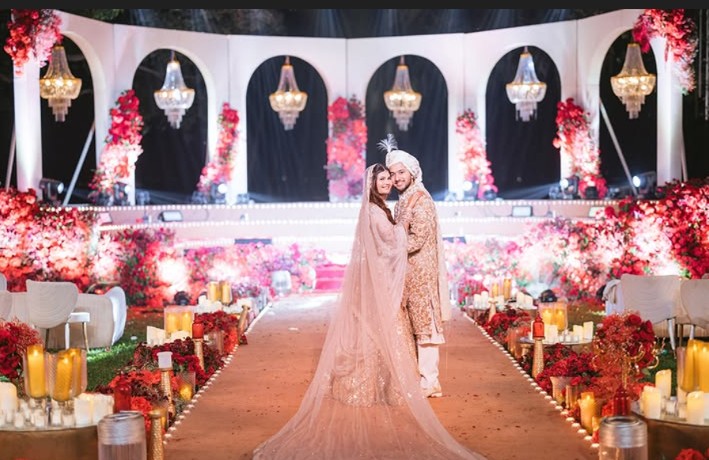
You Are Prepared for Marriage Beyond the Wedding Day
Many people spend enormous amounts of time planning:
- Wedding decorations.
- Photography.
- Clothing.
- Guest lists.
- Ceremonies.
Yet very little time preparing for married life itself.
A wedding may last a day.
Marriage may last decades.
One sign of readiness is focusing on questions such as:
- How will we solve disagreements?
- How will we manage finances?
- What values will guide our family?
- How will we support one another’s dreams?
These conversations matter far more than the details of a celebration.
People who prioritize the marriage rather than merely the wedding are often far more prepared for long-term success.
The Ultimate Test of Marriage Readiness
Perhaps the most important question is not:
“Am I ready to get married?”
Instead, ask:
“Am I ready to consistently contribute to another person’s well-being while continuing to grow myself?”
Marriage is not about perfection.
It is not about having all the answers.
It is not about never making mistakes.
It is about showing up day after day with commitment, honesty, patience, and a willingness to grow together
Truly
When you possess these qualities, you are building the foundation for a successful marriage long before any engagement, ceremony, or wedding takes place.
In the end, marriage readiness is less about reaching a particular age or life stage and more about developing the character, maturity, and mindset necessary to create a lasting partnership. Those who focus on becoming emotionally healthy, responsible, self-aware, and compassionate individuals often discover that they are not only ready for marriage—they are ready to build a relationship that can thrive through every season of life.
Being ready for marriage is not about reaching a specific age, earning a particular salary, or satisfying social expectations. It is about developing the emotional, mental, and practical qualities necessary to build a lasting partnership.
A marriage-ready person understands that love is not merely a feeling but a commitment. They accept responsibility, communicate honestly, respect differences, embrace growth, and approach relationships with maturity.
If you recognize many of the signs discussed in this article, you may be closer to marriage readiness than you realize. If certain areas still need development, that is perfectly normal. Personal growth is an ongoing process, and investing in yourself today can lead to a healthier and more fulfilling marriage tomorrow.
The goal should never be simply to get married.
The goal should be to create a marriage that remains strong, meaningful, and supportive through every season of life.
Before asking whether you have found the right partner, ask whether you are becoming the right partner.
That question may reveal more about your readiness for marriage than any wedding plan ever could.