



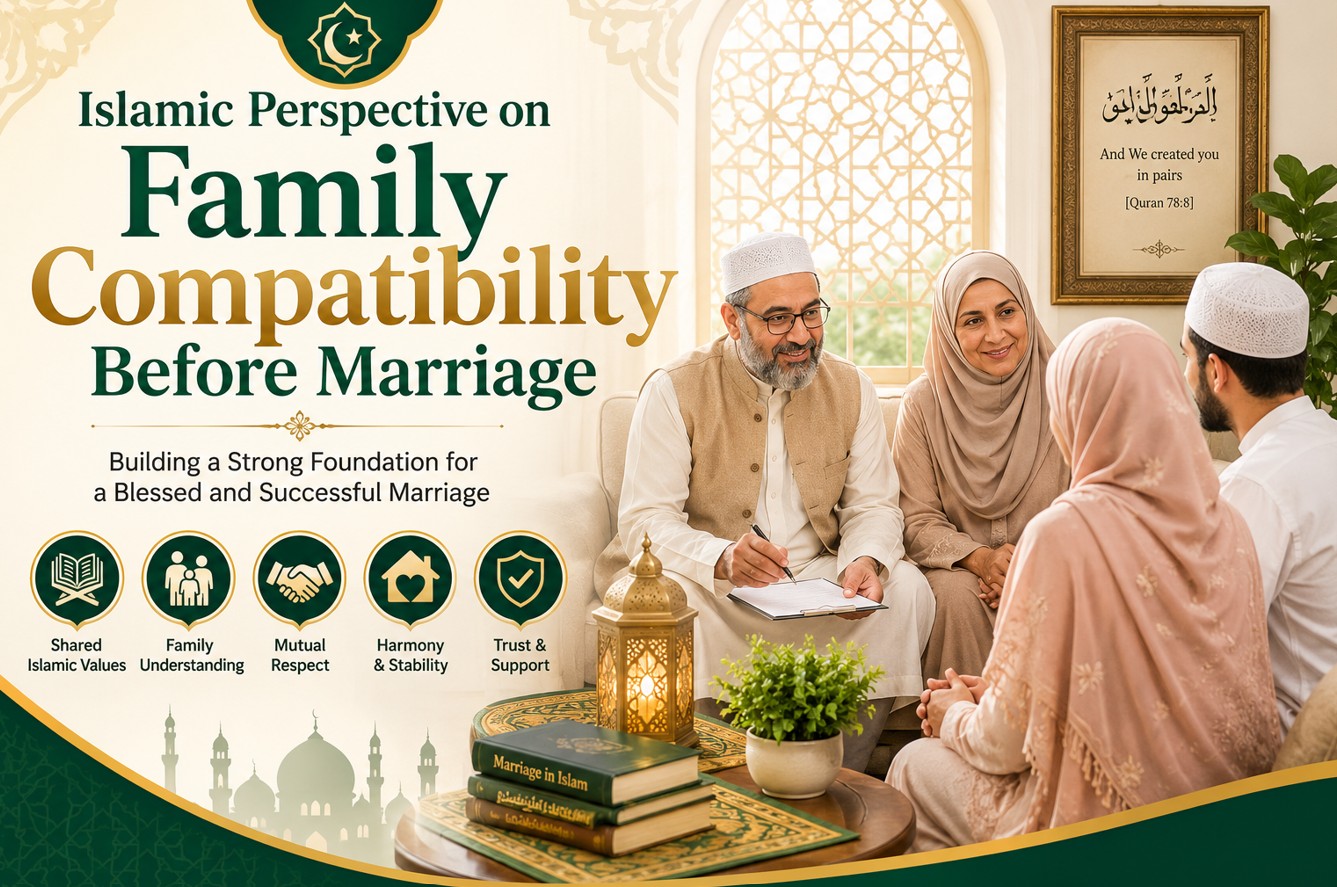
Islamic Perspective on Family Compatibility Before Marriage:
 Building a Strong Foundation for a Blessed Marriage
Introduction
Marriage is one of the most significant institutions in Islam. It is not merely a contract between two individuals but a sacred bond that unites two families and lays the foundation for a stable society. Islam places great importance on selecting a righteous spouse and ensuring that the marriage is built upon strong values, mutual understanding, and compatibility.
One of the factors often discussed during the marriage process is family compatibility. While Islam emphasizes individual piety and character as the primary criteria for marriage, family background and compatibility also play an important role in creating harmony and long-term stability in married life.
In today’s world, where marriages often face challenges arising from differences in lifestyle, expectations, values, and family culture, understanding the Islamic perspective on family compatibility before marriage is more important than ever.
This article explores the concept of family compatibility in Islam, its importance, relevant Islamic teachings, practical considerations, and how platforms like KabinBD can help families make informed decisions before marriage.
Understanding Compatibility in Islam
The Arabic term often associated with compatibility is Kafa’ah (Kufu’), which refers to suitability or compatibility between prospective spouses.
Islam teaches that marriage should be based primarily on:
- Faith and piety
- Good character
- Mutual respect
- Emotional compatibility
- Family harmony
The Prophet Muhammad (ﷺ) said:
“When someone whose religion and character you are pleased with comes to you seeking marriage, then marry him.”
This hadith highlights that religious commitment and character are the most important qualities when evaluating a potential spouse.
However, Islamic scholars have also discussed the importance of compatibility in various aspects of life to ensure marital stability and reduce conflicts.
What Is Family Compatibility?
Family compatibility refers to the degree of similarity and harmony between two families regarding:
- Religious values
- Moral standards
- Cultural practices
- Educational background
- Social expectations
- Lifestyle preferences
- Family traditions
- Financial outlook
It does not mean that families must be identical.
Rather, it means that differences should be manageable and should not create major obstacles to a peaceful marriage.
When two families share similar values and expectations, couples often find it easier to build a successful and harmonious life together.
Why Family Compatibility Matters in Islam
- Marriage Connects Two Families
In Islam, marriage is not viewed solely as a relationship between a husband and wife.
It is also a relationship between:
- Parents
- Siblings
- Relatives
- Extended family members
Because family interactions continue after marriage, compatibility between families can significantly influence marital happiness.
A supportive family environment often strengthens the marriage.
On the other hand, continuous family conflicts may create stress and tension between spouses.
- Shared Values Create Stability
Families shape a person’s beliefs, habits, and worldview.
Before marriage, it is important to understand:
- How each family practices Islam
- Their attitudes toward modesty
- Their approach to raising children
- Their views on gender roles
- Their expectations regarding family involvement
When values align, the couple faces fewer misunderstandings after marriage.
- Reduces Future Conflicts
Many marital disputes arise not from the couple themselves but from family expectations.
Examples include:
- Living arrangements
- Financial support for parents
- Child upbringing
- Family visits
- Cultural customs
Understanding these issues before marriage helps prevent future disagreements.
Islam encourages transparency and clarity in all matters, including marriage discussions.
Religious Compatibility: The Highest Priority
Islam places religion above all other forms of compatibility.
Allah says in the Quran:
“Indeed, the most noble of you in the sight of Allah is the most righteous of you.”
This verse emphasizes that piety is more important than wealth, status, race, or family background.
When both families prioritize Islam:
- Decision-making becomes easier
- Conflicts are resolved according to Islamic teachings
- Children receive proper Islamic guidance
- Family relationships become stronger
A marriage built on faith has a greater chance of success than one built solely on worldly considerations.
Family Values and Islamic Upbringing
Every family develops unique traditions and habits.
Before marriage, prospective spouses should understand:
Religious Practice
Questions to consider:
- Does the family pray regularly?
- Is Islamic education encouraged?
- Are Islamic values respected?
Modesty Standards
Families may differ regarding:
- Dress codes
- Gender interaction
- Social activities
Understanding these differences beforehand prevents surprises later.
Family Priorities
Some families prioritize:
- Religious education
- Career development
- Business growth
- Community service
Knowing these priorities helps assess compatibility.
Educational Compatibility
Islam encourages seeking knowledge.
Educational compatibility does not necessarily mean identical degrees or professions.
However, similarities in educational background often contribute to:
- Better communication
- Shared interests
- Similar life goals
- Intellectual understanding
For example:
A highly educated family may place strong emphasis on higher education for future children.
Another family may prioritize business experience over formal education.
Discussing such expectations before marriage is beneficial.
Financial Compatibility from an Islamic Perspective
Financial issues are among the leading causes of marital conflict worldwide.
Islam provides clear guidance regarding financial responsibilities.
The husband is obligated to provide:
- Food
- Clothing
- Housing
- Basic necessities
Before marriage, families should discuss:
- Financial expectations
- Career plans
- Lifestyle preferences
- Future goals
Islam encourages moderation and discourages extravagance.
A marriage should not be judged solely based on wealth.
However, understanding financial values helps avoid misunderstandings.
Cultural Compatibility and Islam
Islam recognizes cultural diversity.
Allah created different nations and tribes so that people may know one another.
Cultural differences are acceptable as long as they do not contradict Islamic teachings.
Examples include:
- Wedding customs
- Food preferences
- Language
- Family traditions
Problems arise when cultural practices conflict with Islamic principles.
Families should distinguish between:
Islamic Requirements
- Nikah
- Mahr
- Rights and responsibilities
Cultural Customs
- Wedding ceremonies
- Social traditions
- Family rituals
Prioritizing Islam over culture creates healthier marriages.
The Role of Parents in Assessing Compatibility
Parents possess life experience and wisdom.
Islam encourages respecting parental guidance during marriage decisions.
Parents may identify:
- Character traits
- Family habits
- Potential concerns
that young people might overlook.
However, Islam does not permit forcing a person into marriage.
Marriage requires the consent of both bride and groom.
The ideal approach is cooperation between:
- The individual
- Parents
- Family members
This balance often leads to better decisions.
Character Compatibility: More Important Than Status
The Prophet Muhammad (ﷺ) repeatedly emphasized character.
Good character includes:
- Honesty
- Patience
- Kindness
- Responsibility
- Respect
Even if families differ in wealth or social status, strong character can overcome many challenges.
By contrast, wealth without good character often leads to difficulties.
When evaluating family compatibility, character should remain a top priority.
Compatibility in Expectations About Married Life
Many marriages encounter problems because expectations were never discussed beforehand.
Important topics include:
Living Arrangements
Will the couple:
- Live independently?
- Live with parents?
- Live abroad?
Career Expectations
Will both spouses work?
How will household responsibilities be managed?
Children
How many children are desired?
What type of Islamic education will they receive?
Family Involvement
How involved will relatives be in daily life?
These discussions help establish realistic expectations.
The Importance of Family Reputation
Islam encourages considering a family’s reputation and moral standing.
This does not mean judging people based on social class.
Rather, families should examine:
- Honesty
- Religious commitment
- Ethical conduct
- Community reputation
A family known for integrity often provides a positive environment for marriage.
Avoiding Tribalism and Classism
Unfortunately, some families reject suitable marriage proposals due to:
- Ethnicity
- Social status
- Nationality
- Financial class
Islam discourages such discrimination.
The Prophet Muhammad (ﷺ) emphasized equality among believers.
A pious person should not be rejected solely because of race or social standing.
Family compatibility should never become an excuse for arrogance or prejudice.
How to Evaluate Family Compatibility Before Marriage
- Observe Religious Practice
Look at:
- Prayer habits
- Islamic knowledge
- Respect for Islamic teachings
- Meet the Family
Personal meetings reveal:
- Communication styles
- Family dynamics
- Values and priorities
- Ask Relevant Questions
Discuss:
- Marriage expectations
- Future goals
- Financial plans
- Child upbringing
- Seek References
Trusted community members can provide valuable insights.
- Perform Istikhara
Seek Allah’s guidance through Salat al-Istikhara.
Allah knows what is best for us.
Common Compatibility Challenges
Different Religious Commitment Levels
One family may be highly practicing while another may be less observant.
Financial Expectations
Disagreements about lifestyle and spending can create tension.
Cultural Differences
Different traditions may cause misunderstandings.
Family Interference
Excessive involvement by relatives may strain the marriage.
Communication Styles
Families communicate differently.
Understanding these differences beforehand is beneficial.
Balancing Compatibility and Trust in Allah
Compatibility is important.
However, Muslims must remember that no family is perfect.
Excessive demands may unnecessarily delay marriage.
After taking reasonable steps:
- Investigating character
- Assessing compatibility
- Seeking advice
- Performing Istikhara
one should place trust in Allah.
True success comes from Allah’s blessings.
Modern Matrimony Services and Family Compatibility
Technology has transformed the marriage process.
Professional matrimony platforms help families evaluate compatibility more effectively.
Services such as KabinBD assist by providing:
- Detailed marriage biodata
- Family information
- Educational background
- Religious preferences
- Marriage counseling support
These tools help families make informed decisions while maintaining Islamic values.
Benefits of Discussing Family Compatibility Early
Early discussions can:
- Prevent misunderstandings
- Clarify expectations
- Strengthen trust
- Reduce future conflicts
- Improve family relationships
Islam encourages openness and honesty.
Concealing important information can damage marital trust later.
Building a Marriage Beyond Compatibility
Compatibility alone does not guarantee success.
A successful Islamic marriage also requires:
Taqwa (God-Consciousness)
Fear and awareness of Allah guide behavior.
Patience
Every marriage experiences challenges.
Mercy
Allah describes marriage as a relationship of mercy.
Communication
Healthy communication resolves conflicts effectively.
Forgiveness
No spouse is perfect.
Forgiveness strengthens relationships.
Practical Advice for Families
Before approving a marriage proposal:
✔ Prioritize religion and character.
✔ Learn about the prospective spouse’s family.
✔ Discuss important expectations.
✔ Avoid discrimination based on wealth or status.
✔ Seek advice from trusted elders.
✔ Pray Istikhara sincerely.
✔ Trust Allah after making reasonable efforts.
The Impact of Family Compatibility on Raising Children
One of the most important yet often overlooked aspects of family compatibility is its influence on future children. In Islam, parents are entrusted with the responsibility of raising children who are morally upright, spiritually aware, and beneficial to society.
When two families share similar Islamic values and parenting philosophies, child-rearing becomes significantly easier. Both spouses are more likely to agree on important matters such as:
- Islamic education
- School selection
- Discipline methods
- Social interactions
- Use of technology and social media
- Memorization of the Quran
- Participation in Islamic activities
However, if the families have fundamentally different views regarding these matters, disagreements may arise after marriage and become more pronounced once children are born.
For example, one family may prioritize Islamic schooling and regular Quran education, while another may focus primarily on secular education. Such differences can create confusion and conflict unless discussed beforehand.
Islam encourages parents to work together in guiding their children toward righteousness. Family compatibility helps establish a united approach that benefits the entire household.
Emotional Compatibility Between Families
Emotional compatibility is another important factor that contributes to marital success.
Every family develops its own communication style. Some families are highly expressive and openly discuss emotions, while others are more reserved and private.
Before marriage, it is helpful to observe:
- How family members communicate
- How conflicts are resolved
- Whether family members show respect to one another
- The level of emotional support provided within the family
A family that promotes kindness, patience, and respectful communication often creates a positive environment for a new marriage.
The Prophet Muhammad (ﷺ) demonstrated exceptional kindness within his family relationships. His example teaches Muslims that emotional intelligence and compassion are essential qualities in building a successful home.
When both families share these values, the newly married couple is more likely to enjoy a peaceful and supportive environment.
Family Compatibility and Conflict Resolution
Every marriage experiences disagreements. The question is not whether conflicts will occur, but how they will be managed.
Family culture often influences how individuals respond to disagreements.
Some families encourage:
- Calm discussion
- Mutual understanding
- Patience
- Reconciliation
Others may respond through:
- Anger
- Avoidance
- Excessive criticism
- Family interference
Understanding these tendencies before marriage can help couples prepare for future challenges.
Islam teaches believers to resolve conflicts through wisdom and justice. Allah says in the Quran that reconciliation is best.
A family environment that values reconciliation and forgiveness can positively influence a marriage for years to come.
The Importance of Honesty During the Marriage Process
Islam places great emphasis on honesty and transparency.
Unfortunately, some families attempt to hide important information during marriage negotiations, including:
- Financial difficulties
- Health concerns
- Family disputes
- Previous marriages
- Significant personal challenges
Such actions can damage trust and create serious problems after marriage.
The Prophet Muhammad (ﷺ) strongly encouraged honesty in all dealings. Marriage is no exception.
Families should strive to provide accurate information and avoid exaggeration or deception. Honesty allows both parties to make informed decisions and establishes trust from the beginning.
A marriage built on truth is more likely to receive Allah’s blessings than one founded on concealment and misrepresentation.

Compatibility in Lifestyle Expectations
Lifestyle differences can have a significant impact on married life.
Areas that should be discussed before marriage include:
Housing Preferences
Some individuals prefer:
- Independent living
- Joint family systems
- Living near parents
- Living abroad
These preferences can affect daily life and should be clarified early.
Social Lifestyle
Families may differ regarding:
- Frequency of social gatherings
- Travel habits
- Community involvement
- Hospitality expectations
Understanding these preferences helps prevent future misunderstandings.
Spending Habits
Some families value simplicity and saving, while others prefer a more luxurious lifestyle.
Islam encourages moderation and discourages wastefulness.
Discussing financial habits before marriage can help couples develop realistic expectations and avoid future conflicts.
The Role of Istikhara in Assessing Compatibility
No matter how carefully families evaluate compatibility, human knowledge remains limited.
For this reason, Islam teaches believers to seek Allah’s guidance through Salat al-Istikhara.
Istikhara is not merely a prayer for signs or dreams. Rather, it is an act of submitting one’s decision to Allah and asking Him to guide what is best.
When considering marriage, Muslims should:
- Gather information.
- Consult trusted individuals.
- Assess compatibility.
- Perform Istikhara sincerely.
- Trust Allah’s decree.
This process combines practical effort with spiritual reliance.
A marriage proposal may appear ideal on paper, but only Allah knows what lies in the future. Istikhara helps believers place their trust in the One who possesses complete knowledge.
Avoiding Unrealistic Expectations About Compatibility
While compatibility is important, Muslims should avoid seeking perfection.
No family is entirely free from weaknesses.
Sometimes families reject excellent proposals because they focus excessively on minor differences such as:
- Occupation
- Social status
- Geographic location
- Educational prestige
Such unrealistic standards can unnecessarily delay marriage and reduce opportunities for suitable matches.
Islam encourages moderation and fairness in evaluating marriage proposals.
If the essential qualities of faith, character, and responsibility are present, minor differences should not become major obstacles.
A successful marriage depends not only on compatibility but also on continuous effort, patience, and commitment from both spouses.
Learning from the Marriages of the Companions
The companions of the Prophet Muhammad (ﷺ) provide valuable examples regarding compatibility and marriage.
Many successful marriages occurred between individuals from different backgrounds, tribes, and economic classes.
What united them was:
- Faith in Allah
- Good character
- Commitment to Islam
These examples demonstrate that while family compatibility is valuable, spiritual compatibility remains the most important factor.
The early Muslim community prioritized righteousness over worldly distinctions, creating strong marriages and stable families.
Modern Muslims can learn from this approach by focusing on values that truly matter in the sight of Allah.
Creating a Marriage That Benefits Society
Islam views marriage as more than a private relationship.
Strong marriages contribute to:
- Stable families
- Responsible children
- Healthy communities
- Social harmony
Family compatibility helps establish a strong foundation upon which these benefits can grow.
When families cooperate, support one another, and share common values, the couple is better equipped to face life’s challenges and fulfill their responsibilities.
A harmonious marriage becomes a source of comfort, mercy, and blessings for everyone involved.
Final Thoughts
Family compatibility before marriage is an important consideration in Islam because it promotes understanding, stability, and long-term harmony. However, it should always be evaluated within the broader framework of Islamic teachings.
The most important criteria remain:
- Strong faith
- Good character
- Religious commitment
- Responsibility
- Mutual respect
Family background, education, culture, and lifestyle preferences are valuable considerations, but they should never overshadow the primary Islamic values that determine the success of a marriage.
Muslims should strive to make balanced decisions by combining practical assessment, parental guidance, honest communication, sincere Istikhara, and trust in Allah.
When compatibility is approached with wisdom and Islamic principles, it becomes a powerful tool for building marriages that are not only successful in this world but also rewarding in the Hereafter. Such marriages create loving families, strengthen communities, and contribute to a society rooted in faith, compassion, and mutual respect.
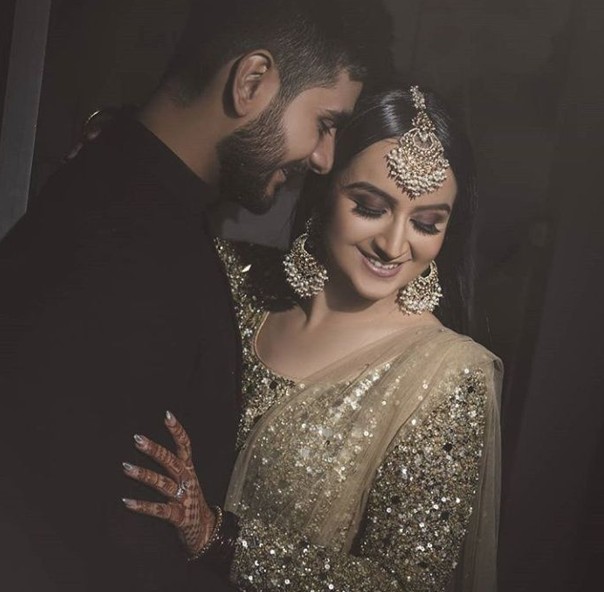
Islamic Perspective
Conclusion
From an Islamic perspective, family compatibility before marriage is an important consideration that helps establish harmony, understanding, and long-term stability. While Islam places the highest emphasis on faith, piety, and good character, family values, upbringing, educational outlook, financial expectations, and cultural practices also contribute to the success of a marriage.
Family compatibility should never become a tool for arrogance, classism, or discrimination. Instead, it should serve as a means of understanding whether two families can cooperate and support the couple in building a righteous and peaceful home.
The ideal Islamic approach combines careful evaluation, open communication, parental guidance, sincere Istikhara, and complete trust in Allah. When families prioritize Islamic values and seek compatibility with wisdom and fairness, they create the foundation for a blessed marriage that benefits not only the couple but future generations as well.
A successful marriage begins long before the wedding day. By understanding family compatibility through the lens of Islam, Muslims can make informed decisions that lead to stronger relationships, happier homes, and a more stable society.