



Marriage Media Success Secrets: What Happy Couples Did Differently
Finding a life partner has never been easy, and in today’s fast-changing world, it has become even more complex. Busy careers, digital lifestyles, changing family expectations, and the desire for emotional compatibility have transformed the way people approach marriage.
This is why marriage media services have become an important bridge between individuals and families seeking meaningful relationships.
Yet, a common question remains: Why do some marriage media matches turn into deeply happy marriages while others struggle or fail?
The answer is not luck alone.
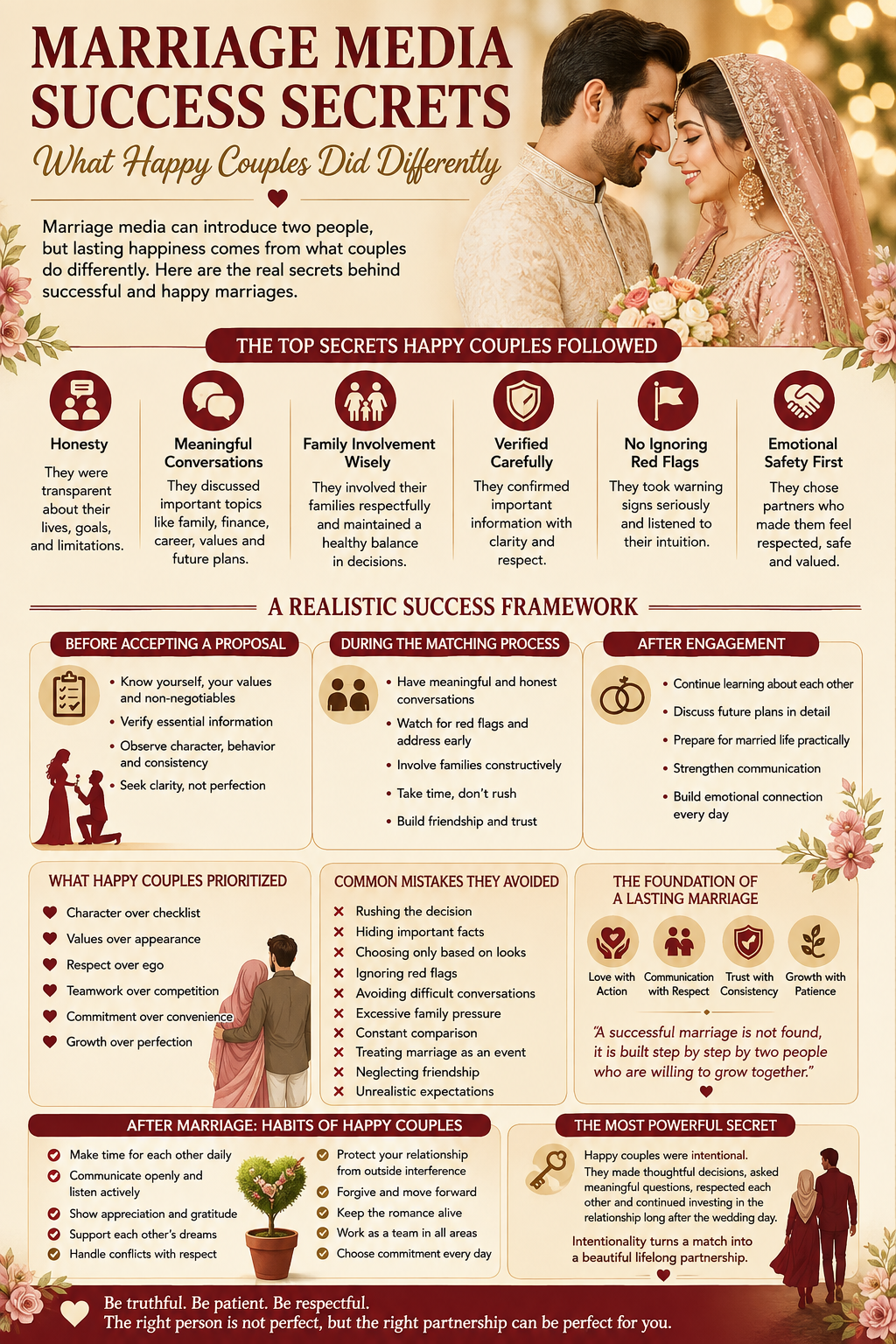
After observing countless successful marriages formed through marriage media platforms, a clear pattern emerges. Happy couples tend to do several things differently before marriage, during the matchmaking process, and after engagement. They communicate better, choose more wisely, involve their families constructively, and focus on long-term compatibility rather than short-term attraction.
This article explores the real success secrets behind happy marriage media couples and offers practical lessons for anyone searching for a life partner through a marriage bureau, matrimonial website, or family matchmaking service.
The Myth of the “Perfect Match”
Many people join marriage media platforms hoping to find a perfect person who matches every expectation—appearance, education, income, family status, personality, religion, hobbies, and future goals. In reality, the happiest couples rarely describe each other as “perfect.”
Instead, they describe qualities such as:
Respectful
Trustworthy
Kind
Emotionally mature
Honest
Supportive
Easy to communicate with
Successful couples understand that marriage is not about finding someone without flaws; it is about finding someone whose values and life direction are compatible with yours.
What They Did Differently
They prioritized character over checklist.
Rather than rejecting a proposal because of a minor preference—height, city, profession, or hobby—they asked deeper questions:
Can I trust this person?
Do they treat others respectfully?
Can we solve problems together?
Are our life goals compatible?
Do I feel emotionally safe with them?
This mindset dramatically improved the quality of their final choice.
They Were Honest From the Beginning
One of the biggest reasons marriage media relationships fail is misrepresentation. People sometimes exaggerate income, hide health issues, conceal previous relationships, or present an unrealistic personality during initial meetings.
Happy couples did the opposite.
They were transparent about:
Career situation
Financial responsibilities
Family expectations
Health conditions
Educational background
Future plans
Personal limitations
Why Honesty Matters
Honesty creates trust, and trust is the foundation of every successful marriage. Couples who started with transparency did not have to spend the early years of marriage uncovering hidden truths.
A successful marriage media match often begins with a simple principle:
“Tell the truth early, even if it risks losing the proposal.”
The right person appreciates honesty more than perfection.
They Invested Time in Meaningful Conversation
Many families arrange one or two formal meetings and then rush toward engagement. Happy couples usually spent more time talking—respectfully and within family boundaries—before making a final decision.
Topics They Discussed
Career ambitions
Living arrangements
Children and parenting
Financial planning
Religious practices
Household responsibilities
Support for elderly parents
Work-life balance
Personal values
Conflict resolution
These conversations revealed compatibility that photographs and biodata could never show.
A Simple Rule
Successful couples did not ask only, “Do we like each other?” They asked, “Can we build a life together?”
They Involved Their Families Wisely
In South Asian cultures, marriage is often a union of two families as well as two individuals. Happy marriage media couples understood this reality.
However, they maintained a healthy balance.
What They Avoided
Allowing relatives to control every decision
Comparing proposals endlessly
Listening to unnecessary gossip
Pressuring either side emotionally
What They Did
Introduced families early
Encouraged respectful interaction
Clarified expectations openly
Resolved misunderstandings quickly
Protected the couple’s own voice in the decision
The most successful families acted as support systems, not decision dictators.
They Looked Beyond Social Status
Education, profession, and family background are important, but many unhappy marriages occur between highly accomplished people. Happy couples recognized that social status does not guarantee emotional compatibility.
They Paid Attention To
Emotional intelligence
Patience
Listening skills
Anger management
Empathy
Responsibility
Respect for boundaries
Ability to apologize
A modest but emotionally mature partner often creates a happier home than an impressive but emotionally unavailable one.
They Verified Information Carefully
Trust is essential, but blind trust is risky. Successful marriage media couples combined openness with sensible verification.
Common Verification Steps
Confirming educational credentials
Understanding employment details
Meeting family members
Checking references when appropriate
Observing behavior across multiple interactions
Importantly, they verified respectfully, not suspiciously. Their goal was clarity, not investigation.
They Did Not Ignore Red Flags
One major difference between happy and unhappy couples is the way they responded to warning signs.
Red Flags They Took Seriously
Frequent lying
Disrespect toward parents or service workers
Extreme jealousy
Uncontrolled anger
Financial irresponsibility
Addictions
Manipulative behavior
Pressure for quick marriage
Refusal to discuss important topics
Many unhappy spouses later admitted, “I noticed the signs before marriage but hoped they would change.”
Happy couples respected their intuition and did not proceed when serious concerns remained unresolved.
They Chose Emotional Safety Over Excitement
Initial attraction is powerful, but long-term happiness depends more on emotional safety than excitement.
Successful couples often described feelings such as:
“I can speak freely with this person.”
“I feel respected.”
“I don’t fear being judged.”
“We can disagree without hostility.”
“I feel calm around them.”
Emotional safety allows love to grow steadily over decades.
They Discussed Finances Before Marriage
Money is one of the most common sources of marital conflict. Happy marriage media couples addressed financial matters early rather than treating them as awkward topics.
Discussions Included
Income and savings
Debt obligations
Support for parents
Spending habits
Joint vs. separate accounts
Future investments
Housing plans
Lifestyle expectations
These conversations reduced misunderstandings after marriage.
Their Secret
They viewed money as a shared responsibility, not a power tool.
They Respected Each Other’s Careers
Modern marriages often involve two educated individuals with professional aspirations. Successful couples discussed career expectations honestly.
Questions They Explored
Will both partners work?
Is relocation acceptable?
How will household duties be managed?
What happens during career transitions?
How will childcare responsibilities be shared?
Mutual respect for each other’s ambitions created partnership rather than competition.
They Practiced Realistic Expectations
Fairy-tale expectations destroy many marriages. Happy couples accepted that marriage includes:
Stress
Illness
Financial pressure
Family obligations
Mood differences
Occasional conflict
Because they expected challenges, they were not shocked by them.
Their Mindset
“Difficult moments are normal; they are not proof that the marriage is wrong.”
This realistic attitude helped them remain committed during hard times.
They Learned How the Other Person Handles Conflict

Conflict is inevitable. The key question is not whether conflict occurs, but how it is handled.
Happy couples observed:
Does the person listen?
Do they become abusive?
Can they calm down?
Are they willing to compromise?
Do they apologize sincerely?
Couples who could discuss disagreements respectfully before marriage usually managed married life more successfully.
They Maintained Boundaries During Courtship
Healthy boundaries build respect. Successful couples avoided excessive emotional dependence before marriage.
They maintained:
Respectful communication
Appropriate timing of conversations
Family awareness
Emotional moderation
Personal dignity
Strong boundaries prevented misunderstandings and built trust between families.
They Paid Attention to Everyday Behavior
Character is revealed in ordinary moments, not formal meetings.
Happy couples noticed:
Punctuality
Courtesy
Treatment of staff
Responsiveness
Consistency between words and actions
Responsibility toward family members
These small observations often predicted future marital behavior more accurately than romantic conversations.
They Shared Core Values
Research consistently shows that shared values matter more than shared hobbies.
Successful couples often agreed on major life principles:
Importance of family
Honesty
Faith or spirituality
Education
Financial responsibility
Parenting philosophy
Respect for elders
Ethical behavior
Differences in taste were manageable; differences in core values were much harder.
They Avoided Comparison
Marriage media platforms can create the illusion of endless options. Some people keep searching for a “better” proposal even after finding a compatible match.
Happy couples stopped comparing once they found genuine compatibility.
They understood:
More options do not guarantee a better marriage.
Constant comparison creates dissatisfaction.
Gratitude strengthens commitment.
A successful marriage begins when two people choose each other wholeheartedly.
They Built Friendship Before Marriage
Romance may attract people; friendship sustains them.
Successful couples developed friendship through conversation, shared values, humor, and mutual support.
Signs of Pre-Marital Friendship
Comfortable silence
Shared laughter
Genuine curiosity about each other
Emotional support during stress
Respectful teasing
Enjoying simple conversations
Friendship becomes especially important after the excitement of wedding celebrations fades.
They Prepared for Married Life, Not Just the Wedding
Many families spend months planning ceremonies but very little time preparing the couple for actual married life.
Happy couples discussed:
Daily routines
Household responsibilities
Time management
Relationships with in-laws
Privacy expectations
Future goals
Health and wellness
Communication habits
They invested more energy in the marriage than in the wedding event.
They Continued Communication After Engagement
Engagement was not treated as the finish line. Successful couples continued learning about each other until marriage.
They used the engagement period to:
Clarify unresolved questions
Observe consistency
Build trust
Discuss future plans
Strengthen emotional connection
This reduced anxiety and created smoother adjustment after marriage.
They Showed Respect During Disagreement
One remarkable trait of happy couples is respectful disagreement. They could hold different opinions without attacking each other’s character.
They Avoided
Insults
Mockery
Threats
Silent punishment
Public criticism
They Practiced
Calm discussion
Active listening
Taking breaks when emotions rose
Seeking solutions
Expressing appreciation even during conflict
Respect during disagreement is often a stronger predictor of marital success than compatibility during happy moments.
They Entered Marriage With a Team Mentality
Unhappy couples often think in terms of “my family,” “your family,” “my money,” and “your problem.” Happy couples think in terms of “our life.”
This team mentality influences everything:
Finances
Parenting
Career decisions
Family obligations
Health challenges
Long-term planning
When problems arise, they stand on the same side of the problem rather than opposite sides of the argument.
They Accepted Growth and Change
People evolve over time. Careers change, health changes, interests change, and responsibilities change.
Successful couples expected growth and supported each other through transitions.
They asked:
“How can I help you become your best self?”
“What do you need from me right now?”
“How can we adapt together?”
Flexibility kept their relationship strong across different life stages.
They Expressed Appreciation Regularly
One surprisingly powerful habit of happy couples is frequent appreciation.
They thanked each other for:
Small household tasks
Emotional support
Financial contribution
Family care
Thoughtfulness
Patience
Appreciation prevents the relationship from becoming emotionally dry.
A simple “thank you” often has more long-term impact than grand romantic gestures.
They Protected Their Marriage From Outside Interference
Successful couples maintained healthy relationships with relatives while protecting the privacy of their marriage.
They avoided:
Sharing every disagreement with outsiders
Allowing relatives to take sides
Publicly criticizing their spouse
Comparing their marriage with others
They sought advice when necessary but kept the couple relationship as the central priority.
They Chose Commitment Daily
Happy marriages are not sustained by feelings alone. They are sustained by repeated acts of commitment.
Commitment appears in everyday choices:
Returning calls
Listening attentively
Keeping promises
Being faithful
Showing up during difficult times
Working through misunderstandings
The strongest marriage media success stories are rarely dramatic; they are consistently dependable.
A Realistic Success Framework for Marriage Media Users
If we summarize the behavior of happy couples, a practical framework emerges.
Before Accepting a Proposal
Know Yourself
Your values
Non-negotiables
Life goals
Emotional needs
Family expectations
Verify Essential Information
Education
Employment
Family background
Health disclosures
Observe Character
Respect
Responsibility
Honesty
Emotional stability
During the Matching Process
Have Meaningful Conversations
Finances
Career
Children
Living arrangements
Faith
Family roles
Watch for Red Flags
Anger
Dishonesty
Pressure
Disrespect
Manipulation
Involve Families Constructively
Early introductions
Clear expectations
Respectful communication
After Engagement
Continue Learning About Each Other
Daily habits
Communication style
Stress response
Future planning
Build Friendship
Shared activities
Honest conversation
Mutual support
Prepare for Marriage Practically
Budgeting
Household planning
Family boundaries
Time management
What Marriage Media Agencies Can Learn
Marriage media organizations also play a crucial role in creating successful matches.
The most trusted agencies focus on:
Accurate profiles
Background verification
Counseling support
Compatibility assessment
Family communication guidance
Ethicalmatchmaking practices
Agencies that prioritize long-term marital success over quick registrations build stronger reputations and more satisfied clients.
Common Mistakes That Happy Couples Avoided
| Mistake | What Happy Couples Did Instead |
| Rushing the decision | Took time to know each other |
| Hiding important facts | Practiced transparency |
| Choosing only based on appearance | Focused on values and character |
| Ignoring red flags | Addressed concerns early |
| Avoiding difficult conversations | Discussed important life issues |
| Excessive family pressure | Maintained balanced involvement |
| Unrealistic expectations | Accepted normal marital challenges |
| Constant comparison | Committed wholeheartedly |
| Neglecting friendship | Built emotional connection |
| Treating marriage as an event | Prepared for lifelong partnership |
The Most Powerful Secret of All
After examining countless successful marriage media stories, one secret stands above all others:
Happy couples were intentional.
They did not leave marriage entirely to fate. They made thoughtful decisions, asked meaningful questions, listened carefully, observed character, respected each other, and continued investing in the relationship after marriage.
Intentionality transformed a matchmaking process into a lifelong partnership.
Conclusion: Success Is Built Before the Wedding Day
Marriage media can introduce two people, but it cannot create a successful marriage on its own. The real success begins with the choices individuals make during the matchmaking journey.
The happiest couples did not necessarily have the most glamorous weddings, the highest incomes, or the most impressive biodata. They succeeded because they practiced honesty, communication, respect, emotional maturity, and commitment from the very beginning.
If you are currently searching for a life partner through a marriage media platform, remember these essential lessons:
Be truthful.
Know your values.
Ask meaningful questions.
Observe character carefully.
Respect your intuition.
Involve families wisely.
Prioritize emotional safety.
Prepare for marriage, not just the wedding.
Build friendship.
Choose commitment every day.
A successful marriage is not found fully formed; it is built step by step by two people who are willing to grow together. Marriage media may open the door, but lasting happiness comes from what couples do differently once that door opens.
The good news is that these success secrets are not reserved for a lucky few. They are practical habits that any sincere person can begin using today—and they may become the foundation of a truly happy marriage tomorrow.
The Role of Patience in Marriage Media Success
One important secret that many happy couples mentioned was patience. In the age of instant messaging and quick decisions, people often expect immediate emotional connection and certainty. Successful couples understood that trust and understanding take time to develop. They did not reject a proposal after one imperfect conversation, nor did they expect complete clarity within a few days.
Patience helped them observe consistency. A person can act impressive for one meeting, but genuine character becomes visible over repeated interactions. Happy couples allowed enough time to see how the other person behaved during stress, disagreement, family discussions, and ordinary daily communication.
Patience also reduced unnecessary pressure. Instead of forcing a decision, they focused on learning about each other gradually. This created a calmer environment where both individuals could express themselves honestly. Many couples later said that the slower, thoughtful approach gave them confidence in their final decision.
In marriage media, patience should not mean endless delay; it means giving the relationship a fair opportunity to grow before making a lifelong commitment. A careful decision made with patience often prevents years of regret. For anyone seeking a meaningful marriage, patience is not a weakness—it is a form of wisdom that protects both the heart and the future family.
Final Thought for Readers
If you are using a marriage media service today, remember that the goal is not simply to get married quickly; the goal is to build a peaceful, respectful, and lasting partnership. Every conversation, every family interaction, and every decision during the matchmaking process contributes to the future quality of the marriage.
Happy couples succeed because they choose understanding over ego, honesty over appearance, and commitment over convenience. They enter marriage with the intention to support each other through both success and hardship. When two people approach marriage with sincerity, patience, respect, and a willingness to grow together, a marriage media introduction can become the beginning of a deeply fulfilling lifelong relationship. Your future happiness may depend less on finding a perfect person and more on becoming a thoughtful partner yourself.
Building a Strong Marriage After the Match
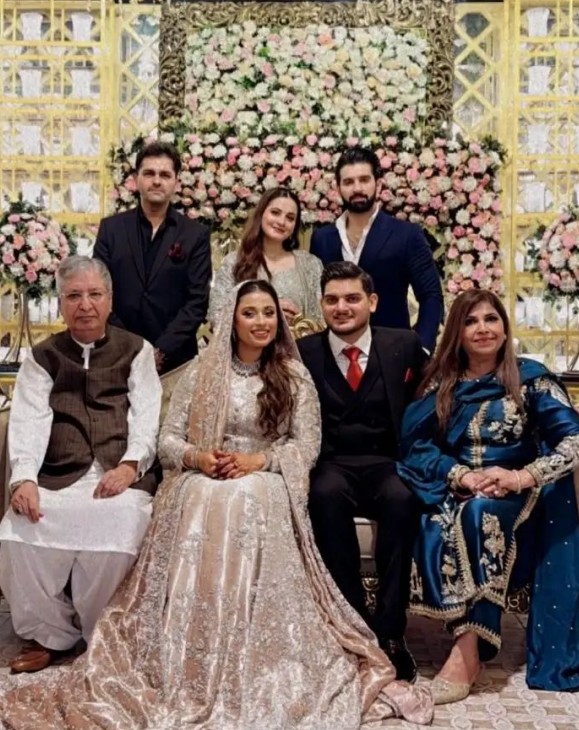
The journey does not end when a marriage proposal is accepted; in many ways, it begins there. Happy couples continue investing in their relationship after marriage through small, consistent actions. They make time for conversation even during busy schedules, celebrate each other’s achievements, and offer support during stressful periods. These everyday habits gradually create a sense of security and emotional closeness that strengthens the marriage over time.
Another common habit is regular communication about changing needs and expectations. As careers grow, families expand, and responsibilities increase, couples who keep talking openly are better able to adjust together. They do not assume that love alone will solve every issue; they actively work on understanding each other.
Successful couples also protect shared time. Whether it is a daily meal together, an evening walk, a weekly family visit, or a simple phone call during work hours, these moments help maintain connection. Consistency matters more than grand gestures.
Importantly, they practice forgiveness. Minor mistakes, misunderstandings, and differences are inevitable in any marriage. Happy couples address problems early, avoid keeping long lists of past hurts, and focus on solutions rather than blame. This creates an atmosphere where both partners feel accepted and valued.
For families using marriage media services, the ultimate goal should be a relationship that continues to grow stronger year after year. A successful match is not measured only by a wedding ceremony; it is measured by mutual respect, emotional peace, shared growth, and the ability to face life’s challenges together with confidence and compassion.